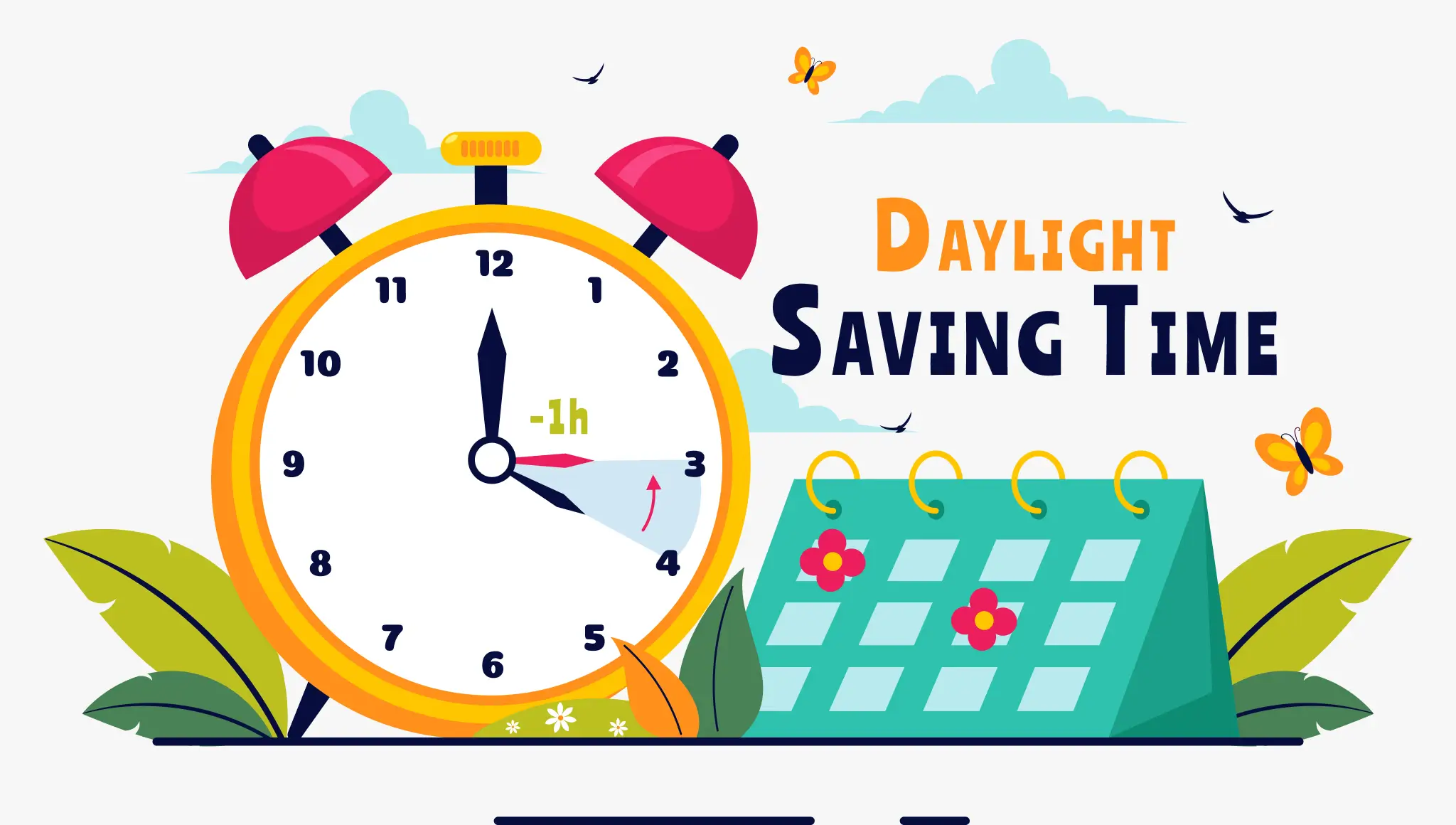
Daylight Saving Time 2026 (9 March): When It Starts, Why We Change Clocks, History, Benefits, Tips & FAQs
Daylight Saving Time (DST) 2026 begins on Monday, March 9, 2026, when clocks are moved forward by one hour in many countries, including the United States and parts of Europe. This annual time change is commonly remembered by the phrase “Spring Forward, Fall Back.”
The purpose of Daylight Saving Time is to make better use of natural daylight, allowing people to enjoy longer evenings with sunlight during the warmer months. While the practice has been used for more than a century, it continues to spark debate about its effectiveness and impact on health, energy usage, and daily routines.
Each year, millions of people adjust their clocks and schedules to adapt to the new time. Understanding how Daylight Saving Time works and why it exists can help make the transition smoother.
When Does Daylight Saving Time Start in 2026?
In 2026, Daylight Saving Time begins on Monday, March 9.
At 2:00 AM, clocks move forward to 3:00 AM, meaning people lose one hour of sleep that night.
Key Dates
- Start of Daylight Saving Time: March 9, 2026
- Time Change: Clocks move forward from 2:00 AM to 3:00 AM
- End of Daylight Saving Time: November 1, 2026
This time change marks the start of longer daylight hours in the evening.
What Happens When Daylight Saving Time Begins?
When Daylight Saving Time begins, clocks move forward by one hour, usually at 2:00 AM. This means people lose one hour of sleep but gain longer daylight in the evening. Understanding what happens during this time change helps people prepare for adjustments in their daily routines.
What Happens When Daylight Saving Time Begins?
When Daylight Saving Time begins, clocks move forward by one hour, usually at 2:00 AM. This means people lose one hour of sleep but gain longer daylight in the evening. Understanding what happens during this time change helps people prepare for adjustments in their daily routines.
Why Do We Have Daylight Saving Time?
The main goal of Daylight Saving Time is to maximize daylight during waking hours. By shifting the clock forward in spring, people can enjoy more daylight after work or school.
Main Reasons for DST
- Better use of natural daylight
- Reduced need for artificial lighting
- Encourages outdoor activities
- Supports retail and recreation industries
- Helps align daily schedules with daylight hours
Although originally introduced to save energy, modern studies suggest the energy savings may be small or inconsistent.
The History of Daylight Saving Time
The concept of adjusting time to use daylight more efficiently dates back centuries.
Key Historical Milestones
- 1784: Benjamin Franklin first suggested the idea of saving daylight.
- 1916: Germany and Austria introduced Daylight Saving Time during World War I to conserve fuel.
- 1918: The United States adopted DST for the first time.
- 1966: The Uniform Time Act standardized Daylight Saving Time in the U.S.
Today, Many countries follow DST, though some have abandoned the practice.
Over time, the system has evolved and continues to be debated around the world
Which Countries Use Daylight Saving Time?
Not all countries follow Daylight Saving Time.
Countries That Use DST
- United States
- Canada
- United Kingdom
- Most European countries
- Australia (some regions)
- New Zealand
Countries That Do Not Use DST
- India
- China
- Japan
- Most African countries
- Many equatorial regions
Countries closer to the equator typically do not observe DST because daylight hours remain fairly consistent throughout the year.
Advantages of Daylight Saving Time - Daylight Saving Time 2026
Daylight Saving Time offers several potential benefits.
- 1. More Evening Daylight
People get extra daylight after work or school, allowing more time for outdoor activities. - 2. Energy Savings
Originally introduced to reduce electricity use, though modern savings are debated. - 3. Economic Benefits
Retail, tourism, and outdoor recreation industries often benefit from longer daylight hours. - 4. Encourages Physical Activity
People are more likely to go outside, exercise, or socialize in daylight. - 5. Reduced Traffic Accidents
Some studies suggest better visibility during evening commutes.
Common Criticisms of Daylight Saving Time - Daylight Saving Time 2026
Despite its advantages, DST also has critics.
- 1. Sleep Disruption
The time change can disturb sleep patterns and cause temporary fatigue. - 2. Health Effects
Some studies link the springtime change to increased stress or heart attack risk. - 3. Confusion and Scheduling Issues
Changing clocks can confuse with international travel, business schedules, and digital systems. - 4. Limited Energy Savings
Modern research suggests energy savings are minimal due to increased use of electronics and air conditioning.
Because of these concerns, several regions are considering permanently ending the practice.
Tips to Adjust to Daylight Saving Time - Daylight Saving Time 2026
The time change can affect sleep and daily routines. These tips can help make the transition easier.
- 1. Adjust Your Sleep Schedule Early
Go to bed 15-20 minutes earlier a few days before the change. - 2. Get Morning Sunlight
Exposure to sunlight helps reset the body's internal clock. - 3. Avoid Late-Night Screen Time
Blue light from screens can disrupt sleep. - 4. Stay Hydrated
Drinking water can help reduce fatigue. - 5. Maintain a Consistent Routine
Keep regular sleep and meal schedules.
Interesting Facts About Daylight Saving Time 2026
- Not all parts of the United States observe DST (for example, Arizona and Hawaii do not).
- The phrase “Spring Forward, Fall Back” helps people remember the clock changes.
- Daylight Saving Time affects over one billion people worldwide.
- Some countries have experimented with permanent daylight saving time.
- Airlines, financial markets, and global businesses must carefully coordinate schedules during time changes
Health Effects of Daylight Saving Time
Changing the clock can temporarily disrupt sleep cycles and biological rhythms. Some studies suggest the time change may lead to fatigue, reduced concentration, and minor health effects during the adjustment period.
Quotes About Time and Change for Daylight Saving Time 2026
-
“Time is what we want most, but what we use worst.”
-
“The two most powerful warriors are patience and time.”
-
“Lost time is never found again.”
-
“Time flies over us, but leaves its shadow behind.”
-
“Better three hours too soon than a minute too late.”
Wishes for Daylight Saving Time 2026
- Wishing you a smooth transition into Daylight Saving Time and many bright evenings filled with sunshine, positivity, and productive moments.
- As the clocks move forward this Daylight Saving Time, may the extra daylight bring renewed energy, happiness, and motivation into your life.
- May this time change remind you to make the most of every hour, enjoy longer evenings, and appreciate the beauty of sunlight in your daily routine.
- Wishing you a refreshing start to the season as Daylight Saving Time begins, bringing brighter days and new opportunities.
- May the longer daylight hours inspire you to spend more time outdoors, enjoy nature, and embrace positive changes.
- As we spring forward into Daylight Saving Time, may your days be productive and your evenings relaxing and joyful.
- Wishing you a bright and energetic season ahead as Daylight Saving Time brings longer days and fresh inspiration.
- May the extra daylight this season fill your days with motivation and your evenings with relaxation and happiness.
- As we adjust our clocks, may we also adjust our mindset to embrace new beginnings and brighter possibilities.
- Wishing you a wonderful Daylight Saving Time filled with sunshine, productivity, and meaningful moments.
Common Myth About Daylight Saving Time
There are many misconceptions about Daylight Saving Time. For example, many people believe farmers created the system, but in reality, many farmers initially opposed it.
Social Media Captions for Daylight Saving Time 2026
- Spring forward and enjoy the extra sunshine.
- Longer days, brighter evenings.
- Hello sunshine, goodbye early sunsets.
- Time to move the clocks forward.
- More daylight, more possibilities.
Quick Poll for Daylight Saving Time 2026
Do you like Daylight Saving Time?
- Yes, I enjoy longer evenings
- No, I dislike changing clocks
- I don't mind either way
- I wish it stayed the same all year
Quick Quiz for Daylight Saving Time 2026
1. When does Daylight Saving Time start in 2026?
- A. March 1
- B. March 9
- C. March 15
Answer: B
2. What happens when DST begins?
- A. Clocks move back one hour
- B. Clocks move forward one hour
- C. Time stays the same
Answer: B
FAQs About Daylight Saving Time 2026
1. When does Daylight Saving Time start in 2026?
It begins on Monday, March 9, 2026, at 2:00 AM.
2. What happens when DST begins?
Clocks move forward by one hour, meaning we lose an hour of sleep.
3. When does Daylight Saving Time end in 2026?
DST ends on November 1, 2026, when clocks move back one hour.
4. Why was Daylight Saving Time created?
It was introduced to save energy and make better use of daylight.
5. Do all countries observe Daylight Saving Time?
No, many countries, such as India and Japan, do not use DST.
6. Do all U.S. states follow DST?
No. Arizona and Hawaii do not observe Daylight Saving Time.
7. Does DST actually save energy?
Energy savings exist but are generally small and debated.
8. Why do people dislike DST?
Many people dislike it because it disrupts sleep schedules.
9. How can I adjust to the time change?
Gradually change your sleep schedule and get morning sunlight.
10. Will Daylight Saving Time ever end?
Some governments are discussing ending it, but currently, it is still widely practiced.
Conclusion
Daylight Saving Time 2026, beginning on March 9, marks the transition into longer days and brighter evenings. While the practice has both supporters and critics, it remains an important part of seasonal timekeeping in many parts of the world.
Whether you enjoy the extra daylight for outdoor activities or simply appreciate the brighter evenings, the time change is a reminder to make the most of every hour and embrace the longer days ahead.
